What Happens When Wooden Export Pallets Fail Customs Inspection?

For exporters, timing is everything.

A delayed shipment can disrupt production schedules, damage customer relationships and create unexpected costs throughout the supply chain.

Many businesses focus on customs paperwork, product documentation and freight arrangements when preparing international shipments. Yet one critical component is often overlooked until problems occur: the pallet.

Wooden pallets remain widely used in export operations. However, when they fail customs inspections or do not meet international phytosanitary requirements, the consequences can be costly.

For manufacturers, distributors and exporters shipping products overseas, understanding these risks is essential.

Why Customs Authorities Inspect Export Pallets

Customs inspections are designed to protect countries from the introduction of harmful pests, insects and plant diseases.

Wood is a natural material that can harbour:

  • Insects
  • Larvae
  • Fungal organisms
  • Plant pathogens
  • Moisture-related contamination

To reduce these risks, many countries enforce strict import regulations governing wooden packaging materials, including pallets.

If pallets do not comply with these requirements, shipments may be delayed, quarantined or rejected.

Understanding ISPM15 Requirements

One of the most important regulations affecting export pallets is ISPM15.

The International Standards for Phytosanitary Measures No. 15 establishes requirements for wooden packaging materials used in international trade.

Under ISPM15, wooden pallets must be:

  • Heat treated
  • Properly marked
  • Free from visible infestation
  • Compliant with international standards

Failure to meet these requirements can result in significant shipping complications.

What Can Cause A Wooden Pallet To Fail Inspection?

Many exporters assume that because a pallet has been used previously, it remains compliant.

Unfortunately, that is not always the case.

Several issues can trigger customs concerns.

Missing ISPM15 Markings

Customs officers frequently check for approved treatment markings.

If markings are:

  • Missing
  • Damaged
  • Unreadable
  • Incorrectly applied

The shipment may be flagged for further inspection.

Visible Pest Activity

Signs of insect damage or infestation can result in immediate scrutiny.

Even minor indications may lead to shipment delays.

Damaged Pallets

Broken boards, structural damage and excessive wear can create compliance concerns and raise questions about pallet suitability.

Contamination Issues

Wood can absorb moisture and contaminants during storage and transportation.

This may increase the risk of inspection failures.

What Happens When A Shipment Fails Customs Inspection?

The consequences extend far beyond a simple delay.

Depending on the destination country and the nature of the issue, exporters may face several costly outcomes.

Shipment Delays

Additional inspections often require time.

Goods may be held at ports, border crossings or customs facilities until further assessments are completed.

For time-sensitive products, even short delays can be disruptive.

Quarantine Procedures

In some situations, shipments may be quarantined while authorities investigate potential risks.

This can significantly extend delivery timelines.

Re-Treatment Requirements

Authorities may require pallets to undergo additional treatment before goods are released.

This creates extra costs and administrative complexity.

Repacking Costs

If pallets are deemed unsuitable, shipments may need to be reloaded onto compliant pallets.

This often involves:

  • Labour costs
  • Storage fees
  • Additional handling charges

Refused Entry

In severe cases, goods may be denied entry altogether.

The financial impact can be substantial.

The Hidden Costs Of Export Delays

Many businesses underestimate the true cost of customs-related disruptions.

Potential consequences include:

Increased Freight Costs

Storage and demurrage charges can accumulate quickly.

Customer Service Issues

Late deliveries can affect customer confidence and future business opportunities.

Production Interruptions

Some customers depend on timely deliveries to maintain production schedules.

Administrative Burden

Managing customs issues consumes valuable internal resources.

Reputational Damage

Repeated shipping problems can affect supplier relationships and international credibility.

Why Exporters Are Moving Away From Wooden Pallets

As global supply chains become more complex, businesses are looking for ways to reduce avoidable risks.

One increasingly popular solution is the use of plastic export pallets.

Unlike wood, plastic pallets eliminate many of the compliance challenges associated with international shipping.

How Plastic Export Pallets Reduce Customs Risks

No ISPM15 Treatment Required

Plastic pallets are exempt from ISPM15 regulations.

Because they are not made from wood, they do not require heat treatment or phytosanitary certification.

This removes a significant compliance burden.

Consistent International Acceptance

Plastic pallets are widely accepted across global markets without additional treatment requirements.

No Pest Infestation Risks

Plastic does not provide a habitat for insects or plant pests.

This reduces the likelihood of inspection concerns.

Moisture Resistance

Plastic pallets do not absorb water, helping maintain cleaner shipping conditions.

Long-Term Reliability

Unlike wood, plastic pallets do not splinter, crack or deteriorate in the same way during repeated international use.

Industries That Benefit Most From Plastic Export Pallets

Many sectors are adopting plastic pallets to improve export efficiency.

These include:

  • Food and beverage manufacturing
  • Pharmaceutical companies
  • Automotive suppliers
  • Industrial manufacturers
  • Agricultural exporters
  • Consumer goods distributors

For businesses shipping internationally on a regular basis, reducing customs risks often becomes a strategic priority.

A Real Export Scenario

Imagine a shipment worth £75,000 arriving at an overseas port.

Customs officers identify wooden pallets with missing treatment markings.

The shipment is held for inspection.

Additional storage charges begin accumulating.

Delivery deadlines are missed.

The customer experiences production delays.

All because of a pallet issue that could have been avoided.

This scenario is more common than many exporters realise.

Five Questions Exporters Should Ask

Before dispatching your next shipment, consider the following.

  1. Are your pallets fully compliant with export regulations?
  2. Can treatment markings be clearly identified?
  3. Are pallets free from damage and contamination?
  4. Could customs delays impact your customers?
  5. Would a plastic export pallet solution reduce operational risks?

These questions can help identify vulnerabilities before goods leave your facility.

Why More UK Exporters Are Choosing Plastic Pallets

Businesses exporting regularly are increasingly prioritising predictability.

Plastic export pallets help achieve this by reducing:

  • Compliance concerns
  • Inspection risks
  • Treatment requirements
  • Pallet damage
  • Shipping disruptions

For many exporters, the reduced risk of delays justifies the investment.

How Beecraft UK Supports International Supply Chains

Beecraft UK supplies export plastic pallets designed to support international shipping operations.

Our export solutions help businesses:

  • Simplify compliance requirements
  • Reduce customs-related risks
  • Improve pallet durability
  • Enhance supply chain reliability
  • Support global distribution networks

With decades of experience supplying UK manufacturers and exporters, we help businesses select pallet solutions suited to demanding international logistics environments.

Frequently Asked Questions

Do plastic pallets require ISPM15 treatment?

No. Plastic pallets are exempt from ISPM15 regulations because they are not made from wood.

Can customs reject wooden pallets?

Yes. Non-compliant wooden pallets can result in shipment delays, quarantine procedures or refusal of entry.

Why are plastic pallets used for export?

Plastic pallets help reduce compliance requirements, pest risks and customs-related complications.

Are plastic export pallets reusable?

Yes. Many plastic export pallets are designed for repeated international shipping cycles.

Which industries use export plastic pallets?

Food, pharmaceuticals, manufacturing, automotive, retail and agricultural sectors commonly use plastic pallets for international shipments.

Protect Your Export Operations From Avoidable Delays

International shipping already presents enough challenges without adding pallet compliance issues to the list.

If your business exports products regularly, reviewing your pallet strategy could help reduce customs risks, minimise delays and improve supply chain reliability.

Beecraft UK supplies export plastic pallet solutions designed to support efficient, compliant international shipping. Contact our team to discuss the most suitable export pallet solution for your operation.
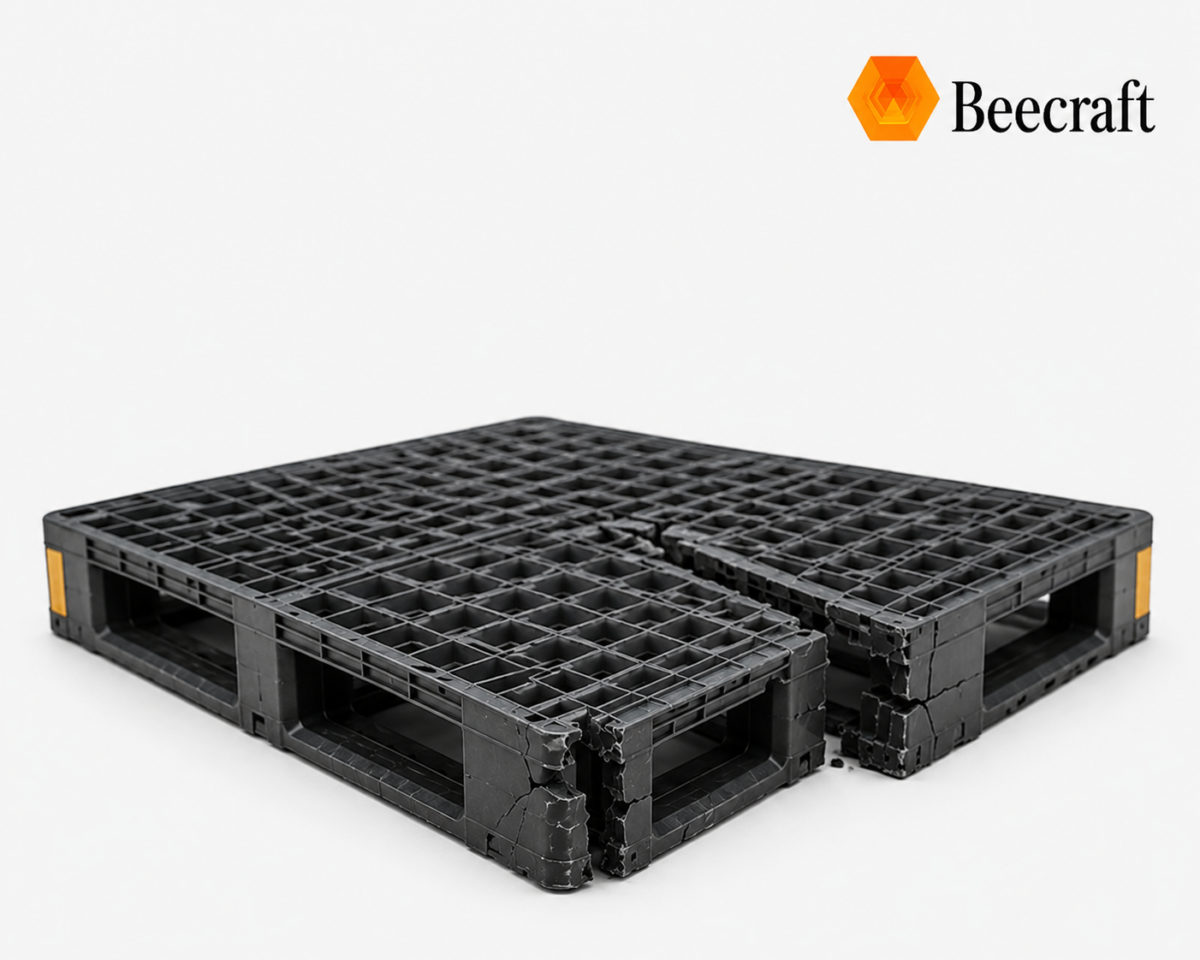
How Much Does A Broken Pallet Really Cost A Warehouse Operation?

Most businesses view pallets as a low-cost warehouse necessity.

A pallet breaks; it gets replaced. Problem solved.

At least that is how many organisations see it.

The reality is very different.

A damaged pallet can trigger a chain of operational issues that cost significantly more than the pallet itself. Product damage, workplace injuries, loading delays, inventory disruption and customer complaints often originate from something as simple as a failed pallet.

For warehouse managers, operations directors and procurement teams, understanding the true cost of pallet failure is essential when evaluating material handling equipment.

The question is not how much a pallet costs to buy.

The real question is:

How much does a broken pallet cost your operation when it fails?

Why Pallet Failure Is More Expensive Than Most Businesses Realise

In busy warehouse environments, pallets support thousands of pounds worth of stock every day.

They move through:

  • Goods receiving areas
  • Storage locations
  • Picking operations
  • Production facilities
  • Loading bays
  • Distribution networks

When a pallet fails, the consequences often extend far beyond replacement costs.

The visible damage may be minor.

The hidden costs can be substantial.

The Direct Cost Of A Broken Pallet

Most companies focus on the obvious expense.

The pallet itself.

Replacing a damaged wooden pallet may seem inexpensive, particularly when compared with alternative solutions.

However, this represents only a small fraction of the total cost associated with pallet failure.

Businesses frequently overlook the operational impact that follows.

Product Damage And Stock Losses

One of the most expensive consequences of pallet failure is damaged inventory.

When pallets crack, collapse or break during handling, products can fall, shift or become unstable.

Common outcomes include:

  • Damaged packaging
  • Crushed cartons
  • Contaminated goods
  • Broken products
  • Unusable stock

For manufacturers, retailers and distributors, a single pallet failure can result in losses worth hundreds or even thousands of pounds.

In some industries, damaged products cannot be reworked or resold.

The loss becomes immediate.

Warehouse Downtime

Every pallet failure interrupts workflow.

Warehouse staff must stop operations to:

  • Secure the area
  • Recover products
  • Remove damaged pallets
  • Re-stack inventory
  • Inspect stock

What may seem like a small incident can quickly consume valuable labour hours.

In high-volume operations, even short disruptions affect productivity targets.

Repeated pallet failures create ongoing inefficiencies that accumulate over time.

Increased Labour Costs

Damaged pallets often require manual intervention.

Employees may need to:

  • Transfer stock to replacement pallets
  • Inspect damaged products
  • Re-label inventory
  • Complete incident reports
  • Conduct safety checks

These additional tasks increase labour requirements without adding value to the operation.

The larger the warehouse, the greater the cumulative impact.

Workplace Safety Risks

Pallet failures are not simply an operational concern.

They are also a workplace safety issue.

Broken pallets can create hazards including:

  • Falling products
  • Trip risks
  • Forklift instability
  • Manual handling injuries

Health and safety incidents can result in:

  • Lost working time
  • Investigation costs
  • Increased insurance exposure
  • Reduced workforce productivity

For warehouse managers, reducing avoidable safety risks is a key operational priority.

Customer Service Consequences

When damaged stock cannot be shipped, customer deliveries may be affected.

This can lead to:

  • Missed delivery deadlines
  • Backorders
  • Replacement shipments
  • Customer complaints

In competitive markets, service failures can impact long-term customer relationships.

The cost of losing a customer often exceeds the value of the damaged products themselves.

The Hidden Cost Of Poor Warehouse Efficiency

Businesses often focus on major investments such as automation, racking systems and warehouse software.

Yet pallet quality directly influences operational efficiency.

Frequent pallet failures contribute to:

  • Slower handling times
  • More stock movements
  • Additional inspections
  • Reduced throughput
  • Increased operational complexity

These inefficiencies may go unnoticed because they occur gradually.

Over time, they become expensive.

Why Wooden Pallets Are More Vulnerable To Damage

Wooden pallets remain widely used across UK warehouses.

However, repeated handling places significant stress on wooden structures.

Common causes of pallet failure include:

Splintering

Wood weakens through repeated impacts and environmental exposure.

Broken Deck Boards

Heavy loads and forklift contact often cause boards to crack or separate.

Nail Failures

Loose fixings can reduce pallet stability and create safety concerns.

Moisture Damage

Exposure to damp conditions can weaken structural integrity.

As pallets age, the likelihood of failure increases.

How Plastic Pallets Help Reduce Operational Costs

Many businesses initially switch to plastic pallets because of durability concerns.

The long-term benefits often extend much further.

Longer Service Life

Plastic pallets are designed to withstand repeated handling and demanding warehouse conditions.

Consistent Structural Performance

Unlike wood, plastic does not splinter, absorb moisture or suffer from nail failures.

Reduced Product Damage

Stable pallet construction helps protect inventory during storage and transportation.

Lower Maintenance Requirements

Plastic pallets require fewer repairs and replacements throughout their lifecycle.

Improved Warehouse Safety

Consistent pallet quality helps reduce handling-related incidents.

A Simple Warehouse Cost Scenario

Consider a warehouse experiencing only two pallet failures per week.

Each incident results in:

  • 20 minutes of labour disruption
  • Product inspection time
  • Inventory re-handling
  • Potential stock damage

Over a year, these seemingly minor events can consume hundreds of labour hours and create avoidable operational costs.

The true expense is rarely the pallet itself.

It is the disruption caused when that pallet fails.

Five Questions Every Warehouse Manager Should Ask

Review your current pallet fleet.

  1. How often are pallets being replaced?
  2. How many product damage incidents involve pallets?
  3. How much labour is spent managing damaged pallets?
  4. Are pallet-related safety incidents increasing?
  5. Could a more durable pallet reduce operational costs?

The answers often reveal opportunities for improvement.

Why Businesses Are Investing In Plastic Pallets

Across manufacturing, retail, logistics and distribution sectors, businesses are increasingly replacing wooden pallets with plastic alternatives.

The reasons are practical.

They want:

  • Fewer failures
  • Better product protection
  • Improved safety
  • Lower lifecycle costs
  • Greater operational consistency

When pallet performance improves, warehouse efficiency often improves alongside it.

How Beecraft UK Supports Warehouse Operations

Beecraft UK supplies plastic pallet solutions designed for demanding warehouse and logistics environments.

Our range includes:

With decades of experience supporting UK businesses, we help organisations identify pallet solutions that reduce operational risks and improve long-term efficiency.

Frequently Asked Questions

How often should warehouse pallets be replaced?

This depends on usage conditions, load requirements and pallet quality. Regular inspections should identify damaged pallets before failure occurs.

Can broken pallets cause product damage?

Yes. Damaged pallets can compromise load stability, increasing the risk of stock loss and packaging damage.

Are plastic pallets stronger than wooden pallets?

Many heavy-duty plastic pallets offer superior durability and consistent performance compared with traditional wooden pallets.

Do plastic pallets reduce warehouse costs?

Although initial purchase costs may be higher, plastic pallets often reduce replacement costs, product damage and operational disruption over time.

What industries benefit most from plastic pallets?

Manufacturing, food production, pharmaceuticals, retail distribution, logistics and export operations commonly use plastic pallets.

The Cost Of Doing Nothing

A broken pallet may appear insignificant.

Yet every pallet failure creates risks that affect productivity, profitability and customer service.

When businesses calculate the full cost of pallet failure, many discover that investing in durable plastic pallets is not an additional expense.

It is a cost reduction strategy.

If your warehouse is experiencing recurring pallet damage, product losses or operational disruption, Beecraft UK can help you identify a pallet solution designed for long-term performance and efficiency.

How To Meet GMP Requirements With Hygienic Plastic Pallets

Good Manufacturing Practice (GMP) standards form the foundation of pharmaceutical quality assurance.
From raw material handling to finished product distribution, every stage of the supply chain must demonstrate effective controls designed to prevent contamination, maintain product integrity and protect patient safety.
While pharmaceutical businesses invest heavily in validated processes, environmental monitoring and staff training, one area often receives less attention than it deserves: pallet selection.
Pallets are used throughout pharmaceutical operations to transport, store and distribute products. If those pallets are difficult to clean, prone to damage or capable of harbouring contaminants, they can create avoidable compliance risks.
For manufacturers, contract packers, wholesalers and pharmaceutical distribution centres, hygienic plastic pallets have become an increasingly important part of GMP-focused operations.

What Does GMP Mean For Material Handling Equipment?

GMP regulations are designed to ensure pharmaceutical products are consistently produced and controlled according to quality standards.

Although GMP guidance does not specify that plastic pallets must be used, it does require businesses to manage contamination risks effectively.

This includes evaluating:

  • Equipment suitability
  • Storage conditions
  • Cleaning procedures
  • Material handling systems
  • Environmental controls

Pallets fall within this wider quality framework.

If a pallet introduces contamination risks, generates debris or cannot be adequately cleaned, it may conflict with GMP objectives.

Why Traditional Pallets Can Create GMP Challenges

Many pharmaceutical facilities continue to use wooden pallets in certain areas of their operation.

While suitable for some industrial environments, wooden pallets can present several challenges where hygiene and contamination control are priorities.

Porous Construction

Wood naturally absorbs moisture.

This can lead to:

  • Bacterial growth
  • Mould development
  • Fungal contamination
  • Odour retention

These conditions are not ideal within pharmaceutical supply chains.

Surface Damage

Wooden pallets deteriorate over time.

Common issues include:

  • Splintering
  • Cracked boards
  • Loose fixings
  • Surface degradation

Each of these can introduce foreign particles into storage and handling areas.

Cleaning Limitations

Even with regular cleaning, contaminants can remain trapped within porous surfaces.

This makes it difficult to achieve consistent sanitation standards.

Why Hygienic Plastic Pallets Support GMP Objectives

Plastic pallets are designed to provide a cleaner, more controlled alternative.

For pharmaceutical environments, their characteristics align closely with contamination prevention strategies.

Non-Porous Surfaces

Unlike wood, plastic does not absorb moisture.

This reduces opportunities for microbial growth and helps maintain cleaner storage conditions.

Easy Cleaning And Sanitisation

Hygienic plastic pallets can be washed, sanitised and dried more effectively.

This helps facilities maintain documented cleaning procedures and support audit requirements.

Reduced Particle Generation

Plastic pallets do not produce:

  • Wood dust
  • Splinters
  • Broken boards

This contributes to cleaner operational environments.

Consistent Design

High-quality moulded plastic pallets offer uniform construction and predictable performance.

Consistency is particularly valuable in regulated industries where standardisation supports compliance.

Key GMP Areas Where Pallet Selection Matters

Raw Material Storage

Active ingredients, excipients and packaging components often spend significant periods in warehouse storage.

Using hygienic pallets helps minimise contamination risks during this stage.

Production Support Areas

Although pallets may not enter critical

zones, they frequently support adjacent operations.

Maintaining hygiene standards throughout the wider facility is essential.

Packaging Operations

Packaging areas require strict control of foreign materials.

Plastic pallets reduce the risk of introducing debris and contaminants into packaging processes.

Finished Product Warehousing

Products awaiting distribution must remain protected from environmental contamination.

Hygienic pallets support cleaner storage conditions throughout this stage.

Pharmaceutical Distribution

Finished medicines often travel through multiple handling points before reaching healthcare providers.

Durable plastic pallets help maintain product protection across the distribution network.

Features To Look For In GMP-Friendly Plastic Pallets

Not all pallets are designed for pharmaceutical applications.

When selecting pallets, consider the following features.

Smooth Closed Surfaces

Closed deck designs minimise dirt accumulation and improve cleanability.

Moisture Resistance

Pallets should resist water absorption and support wash-down procedures.

Durable Construction

Long service life reduces damage-related contamination risks.

Chemical Resistance

Pharmaceutical facilities often use cleaning agents and disinfectants.

Pallets should withstand regular sanitation procedures without degrading.

Consistent Dimensions

Uniform pallets improve storage efficiency and operational consistency.

Common GMP Audit Questions Related To Pallets

Quality assurance teams are increasingly reviewing pallet management procedures during audits.

Questions may include:

  • How are pallets cleaned?
  • How often are pallets inspected?
  • Are damaged pallets removed from service?
  • What contamination controls are in place?
  • Are pallets suitable for the products being stored?

Businesses with documented pallet management programmes are often better positioned during inspections.

A Practical Pharmaceutical Pallet Compliance Checklist

Review your current pallet fleet against the following questions:

✓ Can pallets be effectively sanitised?

✓ Do pallets absorb moisture?

✓ Are pallets free from splinters and loose components?

✓ Is there a documented inspection process?

✓ Are damaged pallets removed promptly?

✓ Are pallets suitable for regulated environments?

✓ Can pallets support long-term hygiene objectives?

If several answers are “no”, it may be time to review your pallet strategy.

The Business Benefits Beyond Compliance

Many pharmaceutical companies initially switch to plastic pallets to improve hygiene standards.

However, operational benefits often extend beyond compliance.

Businesses frequently report improvements in:

  • Warehouse cleanliness
  • Product protection
  • Handling efficiency
  • Pallet lifespan
  • Workplace safety
  • Supply chain consistency

When evaluated across the pallet lifecycle, plastic pallets often deliver measurable long-term value.

Why Pharmaceutical Businesses Choose Beecraft UK

Beecraft UK supplies plastic pallet solutions designed for demanding industrial environments.

Our pharmaceutical pallet range supports businesses seeking:

  • Improved hygiene standards
  • Long-term durability
  • Reliable handling performance
  • Contamination risk reduction
  • Efficient warehouse operations

With decades of experience supplying plastic pallets across regulated industries, we help businesses identify solutions aligned with their operational and compliance requirements.

Frequently Asked Questions

What is a GMP compliant pallet?

A GMP compliant pallet is a pallet suitable for pharmaceutical and regulated environments where contamination control, hygiene and cleanability are essential.

Why are plastic pallets preferred in pharmaceutical facilities?

Plastic pallets offer non-porous surfaces, easier cleaning and reduced contamination risks compared with traditional wooden pallets.

Can plastic pallets be sanitised?

Yes. Hygienic plastic pallets can be washed and sanitised using standard cleaning procedures.

Are plastic pallets suitable for cleanroom support areas?

Many pharmaceutical businesses use hygienic plastic pallets in cleanroom support environments due to their cleanability and contamination control benefits.

How long do pharmaceutical plastic pallets last?

High-quality plastic pallets can provide many years of service depending on usage conditions and load requirements.

Reviewing Your Pallet Strategy

GMP compliance is built on risk management and continuous improvement.

While pallets may seem like a minor part of the operation, they play an important role in maintaining hygiene standards throughout pharmaceutical supply chains.

If your facility is reviewing contamination controls, warehouse procedures or audit readiness, pallet suitability should form part of that assessment.

Beecraft UK supplies hygienic plastic pallet solutions designed to support pharmaceutical manufacturing, storage and distribution operations across the UK. Speak with our team to discuss the most suitable pallet system for your requirements.


Get a Quote