
Description
Closed surface, closed handle — and why both matter
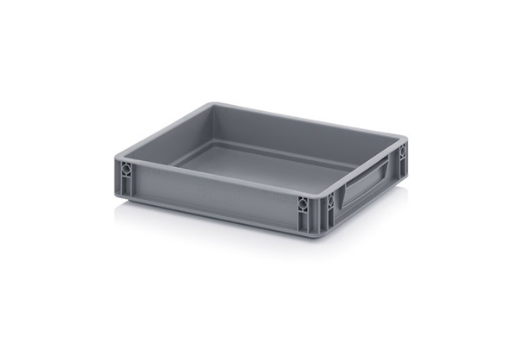
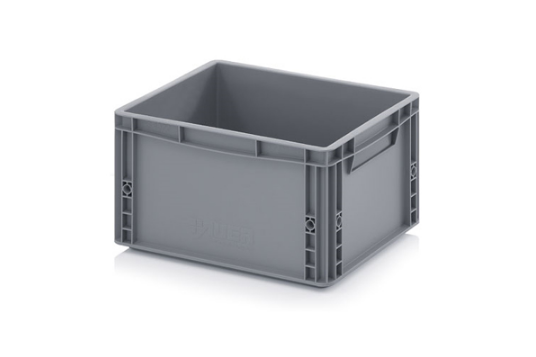
A closed surface means solid walls and base rather than mesh, so fine product, liquids and dust stay in and the container washes down cleanly. A closed handle is a grip opening that does not go through the wall, so nothing escapes through the handle either.
Together they make this the specification for food, pharmaceutical and any application where an open-mesh container would leak or fail a hygiene audit. The 400 mm length is the standard Euro container module, so it stacks and fits standard dollies and shelving.
See the full containers and crates range.
Euro modules and why they matter
Euro containers are built to a module system so that sizes tessellate: smaller containers combine exactly into the footprint of larger ones, and the whole family fits Euro pallets, dollies and shelving without gaps.
That is the practical reason to stay inside the Euro system rather than buying containers on price. A container that does not tessellate wastes space on every pallet, every shelf and every vehicle for its entire life, and the waste is invisible because nothing looks wrong.
Acids and alkalis
These containers are not sensitive to acids or alkalis. That widens the application well beyond food into chemical decanting, laboratory work and cleaning-product handling — anywhere spillage onto the container is routine rather than exceptional.
Stacking
Designed to stack, which at 400 mm length means the stack goes up quickly. Check your stack height against both the ceiling and what an operator can safely reach when placing the top container, not just against the rated stack load.
Shallower options: 200 to 300 mm containers.
See the containers and crates range.

Reviews
There are no reviews yet.