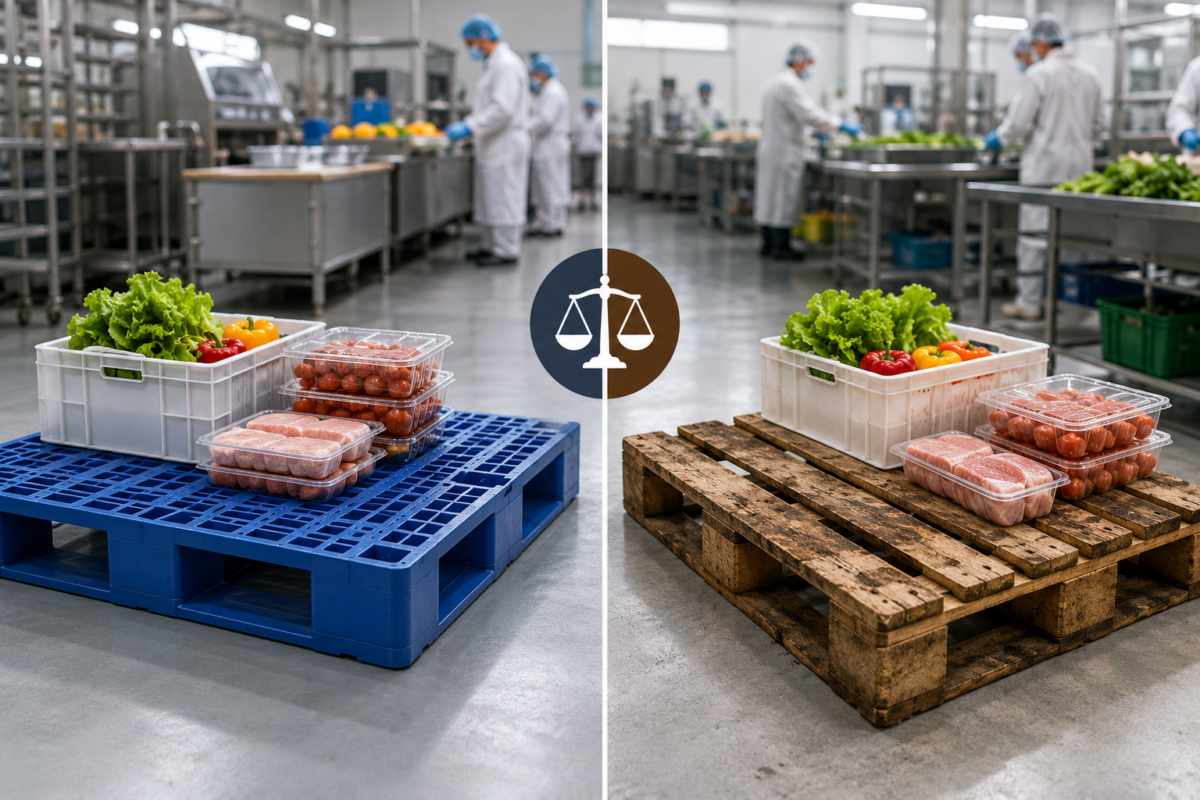
Choosing the right pallet is an important decision for any food manufacturer. Pallets are used throughout production, storage and distribution, often coming into close contact with packaged products and food handling areas. While both wooden and plastic pallets are widely used, they perform very differently in environments where hygiene, cleanliness and product protection are priorities.
Understanding these differences can help businesses select a pallet that supports efficient operations while maintaining high food safety standards.
How do food manufacturers compare plastic and wooden pallets?
Both plastic pallets and wooden pallets are used throughout the food industry, but they perform very differently in demanding production environments. Factors such as hygiene, durability, moisture resistance and ongoing maintenance can all influence operational efficiency and food safety. Understanding these differences helps businesses choose the pallet that best suits their manufacturing process.
• Hygiene
One of the biggest differences between the two materials is how easily they can be cleaned. Plastic pallets have smooth, non-porous surfaces that can be washed and sanitised quickly, making them well suited to food manufacturing environments where maintaining high hygiene standards is essential.
Wooden pallets, on the other hand, can absorb moisture and trap dirt or food residues within the timber, making thorough cleaning more difficult over time.
• Durability
Food production facilities often move pallets continuously between production lines, storage areas and distribution centres. Plastic pallets are designed to withstand repeated forklift handling without splintering, cracking or developing loose nails.
Wooden pallets are more susceptible to everyday wear and may require repairs or replacement after frequent use, increasing maintenance demands and operational interruptions.
• Moisture Resistance
Many food production environments involve regular wash-down procedures, chilled storage or high levels of humidity. Unlike timber, plastic pallets do not absorb water, making them resistant to rot, swelling and mould.
Wooden pallets can retain moisture over time, which may affect their condition and reduce their service life in damp environments.
• Maintenance Requirements
Routine pallet maintenance can consume valuable time and resources. Plastic pallets require very little maintenance because they are less likely to suffer from broken boards, splinters or protruding nails.
Wooden pallets often need regular repairs or replacement to remain suitable for everyday use, increasing both labour requirements and long-term operating costs.
While both pallet types have their place, many food manufacturers choose plastic pallets because they provide better hygiene, greater durability and more consistent performance in demanding food production environments.
Practical Example
Imagine a food processing facility operating multiple wash-down cycles every day. Wooden pallets exposed to repeated moisture may deteriorate over time, requiring replacement and additional maintenance. Food-safe plastic pallets, by contrast, continue to perform reliably because they do not absorb water and are designed for regular cleaning.
Which Food Businesses Benefit Most from Plastic Pallets?
Many sectors within the food industry have adopted plastic pallets for food production, including:
• Food Manufacturing
Supporting hygienic handling of ingredients and finished goods.
• Beverage Production
Providing reliable transport for bottled and packaged products.
• Cold Storage
Maintaining performance in chilled and frozen environments.
• Food Distribution
Helping protect products during storage and dispatch.
• Food Export
Supporting hygienic international transportation.
Across these environments, food-safe plastic pallets help improve cleanliness and operational reliability.
Did You Know?
A food pallet may be handled dozens of times before products reach retailers or consumers. From production lines and cold stores to distribution centres and delivery vehicles, every handling stage increases the importance of using a hygienic and durable pallet.
What Other Advantages Do Plastic Pallets Offer in Food Production?
While hygiene is one of the main reasons food manufacturers choose plastic pallets, it’s not the only advantage. The right pallet can also improve operational efficiency, workplace safety and long-term cost management. These additional benefits often play an important role in helping businesses optimise their day-to-day production processes.
• Faster Cleaning and Turnaround
Smooth, non-porous plastic pallets can be cleaned and sanitised more quickly than wooden pallets. This helps reduce cleaning time, supports efficient production schedules and allows pallets to return to service sooner.
• Consistent Handling Performance
Manufactured to precise dimensions, plastic pallets provide reliable stacking and stable handling throughout production, storage and distribution. This consistency helps improve workflow efficiency and reduces the risk of unstable loads.
• Improved Workplace Safety
Unlike timber pallets, plastic pallets do not splinter or contain loose nails that could create handling hazards. Their durable construction helps provide a safer working environment for employees involved in material handling.
• Longer Service Life
Designed for repeated use in demanding environments, plastic pallets generally remain in service much longer than traditional wooden alternatives. Their durability helps reduce replacement frequency and contributes to lower long-term operating costs.
By offering benefits that extend beyond hygiene, plastic pallets help food manufacturers improve productivity, enhance workplace safety and achieve better long-term value across their operations.
Expert Tip
Before changing pallet types, review your complete production process. Consider cleaning procedures, storage conditions, handling frequency and product movement. Selecting a plastic pallet that matches these requirements will usually provide better long-term performance than choosing solely on purchase price.
Why Food Manufacturers Choose Beecraft UK
With over 35 years of experience, Beecraft UK supplies food-safe plastic pallets to manufacturers, processors and distributors throughout the UK.
• Over 35 Years of Experience
Supporting food businesses since 1989.
• Hygienic Pallet Solutions
A range of plastic pallets designed for demanding food production environments.
• Expert Industry Advice
Helping businesses choose pallets based on hygiene, handling and operational requirements.
• Built for Daily Food Production
Designed for repeated handling, easy cleaning and long service life.
Looking for Food-Safe Plastic Pallets?
Whether you operate a food manufacturing plant, cold store or distribution centre, Beecraft UK can help you choose plastic pallets for food production that support hygiene, durability and operational efficiency.
FAQs
Which pallet is better for food production?
Many food manufacturers choose pallet solutions because they are easier to clean, moisture-resistant and require less maintenance than wooden pallets.
Why are food manufacturers switching to plastic pallets?
Businesses often switch to plastic pallets to improve hygiene, reduce maintenance and achieve better long-term operational efficiency.
Can plastic pallets support food safety?
Yes. Their non-porous surfaces are easier to clean and less likely to absorb moisture or harbour contaminants than timber.
Do plastic pallets perform well in cold storage?
Yes. Plastic pallets resist moisture and maintain their performance in chilled and frozen food environments.
Are plastic pallets more cost-effective than wooden pallets?
Although they cost more initially, pallet solutions often provide better long-term value through greater durability and fewer replacements.
What should businesses consider before switching pallet types?
Compare hygiene requirements, load capacity, storage conditions, handling methods and long-term operating costs before making a decision.
Related reading
- food grade plastic pallets — virgin HD-PE and geometry an auditor can verify.
- pallets for the food industry — washdown and zoning in practice.
- how the right pallet protects a food business — the risk the pallet carries.
- heavy duty plastic pallets — racked ratings, not headline load figures.