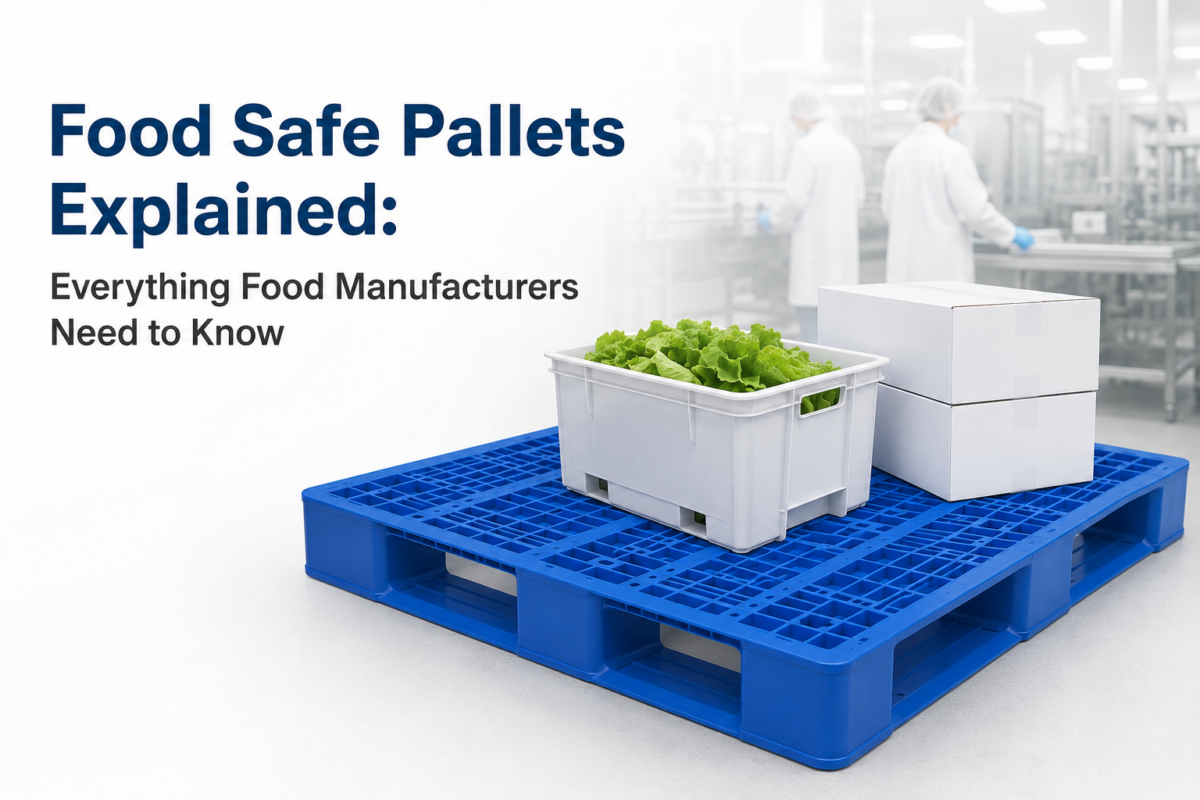
Food safety begins long before products reach supermarket shelves. Every stage of the supply chain, from production and storage to transportation and distribution, relies on equipment that supports hygienic handling practices. One often-overlooked component is the pallet.
While pallets may appear to be simple handling equipment, the wrong choice can introduce contamination risks, increase cleaning requirements and affect operational efficiency. Understanding what makes a pallet food safe helps manufacturers, processors and distributors make better decisions for their facilities.
What Makes Pallet Food Safe?
Not every pallet used in the food industry is considered food-safe. A food safe pallet is designed to minimise contamination risks while supporting hygienic handling throughout the supply chain.
The key characteristics include:
• Non-Porous Surface
Unlike timber, plastic does not absorb moisture, reducing the likelihood of bacteria, mould and contaminants becoming trapped within the pallet.
• Easy to Clean
Smooth surfaces allow pallets to be washed and sanitised quickly, helping businesses maintain high hygiene standards.
• Resistant to Contamination
Plastic pallets do not splinter or produce wood dust that could contaminate food products or production environments.
• Suitable for Hygienic Operations
Many food-grade plastic pallets are designed for use in food processing plants, cold storage facilities and distribution centres where cleanliness is essential.
Choosing a pallet with these characteristics helps businesses improve hygiene, reduce contamination risks and support food safety throughout the supply chain.
Why Does Pallet Choice Matter in the Food Industry?
Although wooden pallets remain common in many industries, food manufacturers often face additional challenges because timber is a natural material.
• Reducing Contamination Risks
Pallets come into direct contact with products, packaging and production areas throughout the supply chain. Choosing a hygienic pallet helps minimise the risk of bacteria, dirt and other contaminants affecting food products.
• Supporting Effective Cleaning
Food production environments require equipment that can be cleaned quickly and thoroughly. Pallets with smooth, non-porous surfaces are easier to wash and sanitise, helping businesses maintain consistent hygiene standards.
• Protecting Products During Handling
A strong and reliable pallet provides stable support during storage, transportation and warehouse handling. This helps reduce product damage, protect packaging and improve overall operational efficiency.
• Helping Meet Food Safety Standards
Many food manufacturers choose hygienic plastic pallets because they support clean handling practices and are suitable for environments where maintaining high hygiene standards is essential.
These challenges have encouraged many food businesses to review alternative pallet solutions that better support hygiene and operational efficiency.
Did You Know?
Many food manufacturers spend thousands of pounds each year replacing damaged wooden pallets that have absorbed moisture, splintered or failed hygiene inspections. Switching to durable plastic pallets can help reduce replacement frequency while supporting cleaner production environments.
Where Are Food Safe Plastic Pallets Commonly Used?
Food-safe plastic pallets are widely used throughout the food supply chain.
• Food Manufacturing
Supporting hygienic handling of raw materials, ingredients and finished products throughout the production process.
• Beverage Production
Supporting the safe handling and transportation of bottled, canned and packaged beverages throughout production and distribution
• Cold Storage Facilities
Moisture-resistant plastic pallets perform reliably in chilled and frozen environments, where hygiene and durability are essential.
• Distribution Centres
Helping maintain product quality during storage, picking and dispatch while supporting efficient warehouse operations.
• Food Export Operations
Providing hygienic, durable pallet solutions that help protect food products throughout international shipping and distribution.
Their versatility makes plastic pallets suitable for almost every stage of food production and distribution.
What Should You Look for in a Food Safe Pallet?
Choosing a food safe pallet involves more than selecting a plastic alternative. The right pallet should support hygiene, withstand demanding production environments and meet the operational needs of your facility.
• Hygienic Design
Look for pallets with smooth, non-porous surfaces that are easy to clean and less likely to harbour bacteria, moisture or food residues.
• Strength for Daily Operations
Food pallets are often used continuously throughout production, storage and distribution. Choosing a durable pallet helps reduce damage, minimise replacements and keep operations running efficiently.
• Suitability for Your Working Environment
Whether your facility includes cold storage, wash-down areas or warehouse racking, select a pallet designed to perform reliably under those specific conditions.
• Long-Term Performance
A food safe pallets should deliver more than hygiene. Consider its expected lifespan, maintenance requirements and overall value to ensure it supports your business for years to come.
Expert Tip
When selecting food safe pallets, don’t focus only on hygiene. Consider how frequently pallets are handled, whether they’re used in racking systems, exposed to moisture or moved through automated equipment. Choosing a pallet that matches your operation can significantly improve both productivity and service life.
Why Businesses Across the UK Trust Beecraft
With over 35 years of experience, Beecraft UK has supplied hygienic plastic pallet solutions to food manufacturers, processors, distributors and logistics providers across the UK.
• Over 35 Years of Experience
Supplying reliable plastic pallet solutions since 1989.
• Hygienic Solutions
Food-grade, heavy-duty, rackable and export pallets for demanding environments.
• Industry Expertise
Helping businesses select pallets that meet hygiene, storage and handling requirements.
• Built for Long-Term Performance
Designed to support efficient food manufacturing and distribution operations.
Looking for Food Safe Plastic Pallets?
Whether you operate a food manufacturing facility, cold store, distribution centre or food export business, Beecraft UK can help you choose the right hygienic plastic pallet for your operation. Contact our team today for expert advice and a tailored quotation.
FAQs
What is a food safe pallets?
A food safe pallets is designed to support hygienic food handling by resisting moisture, contamination and bacterial build-up while remaining easy to clean.
Are plastic pallets better than wooden pallets for food production?
Plastic pallets are often preferred because they are non-porous, easy to sanitise and less likely to splinter or absorb moisture.
Can food safe plastic pallets be used in cold storage?
Yes. Plastic pallets perform well in chilled and frozen environments because they do not absorb moisture or deteriorate in the same way as timber.
Are food safe pallets suitable for HACCP environments?
Yes. Many food manufacturers use hygienic plastic pallets as part of their food safety and hygiene management practices.
How often should food safe pallets be cleaned?
Cleaning frequency depends on the application, but businesses should follow their internal hygiene procedures and food safety requirements.
How do I choose the right food safe pallet?
Consider load capacity, cleaning requirements, storage conditions, handling methods and the hygiene standards required for your operation.
Related reading
- food grade plastic pallets — virgin HD-PE and geometry an auditor can verify.
- pharmaceutical plastic pallets UK — where traceability matters more than price.
- practical steps against warehouse contamination — what to change on the floor.
- plastic pallets and logistics efficiency — where the savings actually come from.