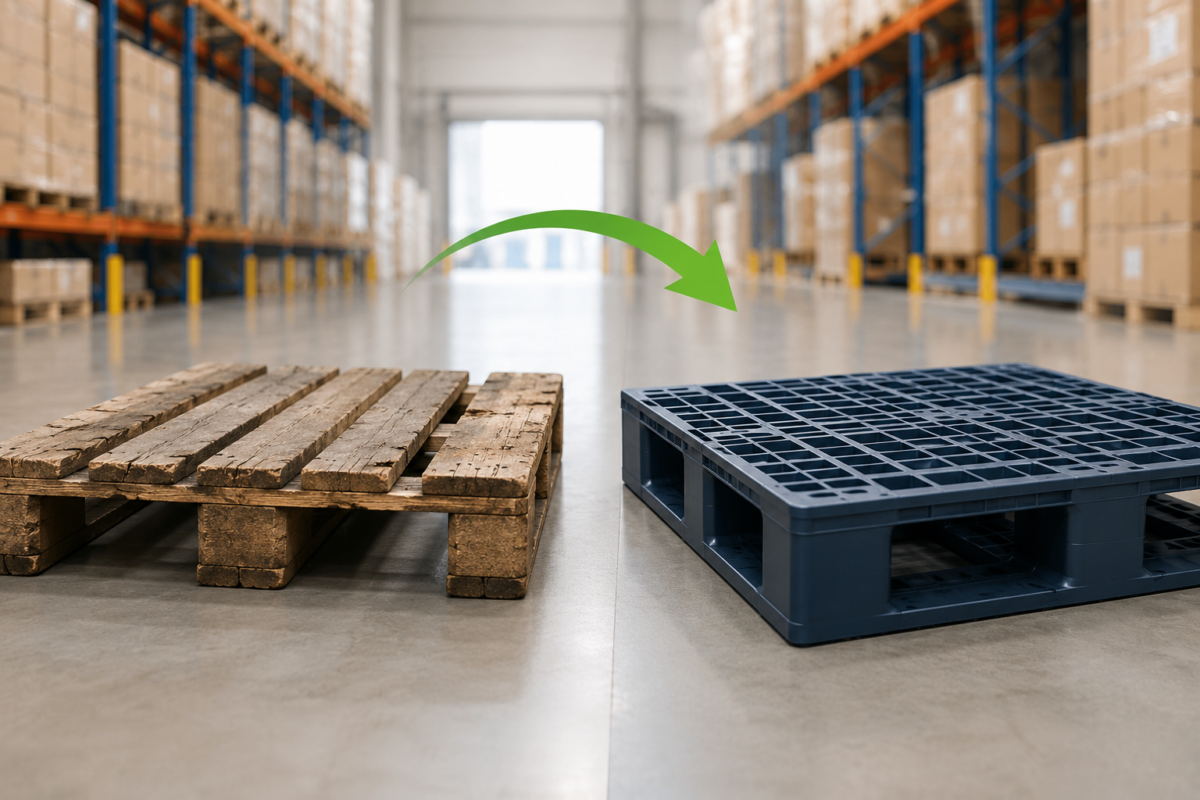
For decades, wooden pallets have played an essential role in UK supply chains. From manufacturing plants and distribution centres to warehouses and logistics operations, they have been the go-to solution for storing, handling and transporting goods. Their affordability, widespread availability and familiarity made them the preferred choice for businesses across a wide range of industries.
However, as warehouse automation, stricter compliance requirements and rising operating costs continue to reshape UK supply chains, many businesses are beginning to question whether traditional wooden pallets still offer the best long-term solution.
What’s Driving the Shift from Wooden to Plastic Pallets?
The move from wooden pallets to plastic alternatives is not simply a change in material – it reflects how warehouse operations have evolved. Businesses are under greater pressure to improve efficiency, reduce operating costs and meet higher standards across their supply chains. As a result, many organisations are reviewing every part of their material handling process, including the pallets they use every day.
Some of the key factors driving this shift include:
Greater Durability for High-Volume Operations
Plastic pallets are designed to withstand repeated forklift handling, heavy loads and demanding warehouse environments. Unlike timber pallets, they do not splinter or loosen over time, reducing the need for frequent repairs and replacements.
Improved Hygiene for Regulated Industries
Because plastic has a non-porous surface, it is much easier to clean and sanitise. This makes plastic pallets particularly suitable for food manufacturing, pharmaceutical storage and other sectors where cleanliness is a key operational requirement.
Reduced Maintenance Requirements
Wooden pallets often require repairs as boards crack or nails become loose. Plastic pallets require very little maintenance, helping warehouse teams spend less time managing damaged equipment and more time focusing on core operations.
Better Long-Term Value
When businesses compare total lifecycle costs rather than initial purchase price, plastic pallets often prove to be the more economical solution thanks to their durability, reduced maintenance and longer service life.
For example, a distribution centre moving thousands of palletised loads each week may experience frequent pallet replacements when using timber pallets. By switching to durable plastic pallets, businesses can reduce maintenance, improve load stability and minimise operational interruptions.
Improving Warehouse Safety
Damaged pallets can contribute to workplace accidents by creating unstable loads or introducing trip hazards through broken boards and loose nails. Replacing worn wooden pallets with durable plastic alternatives can help reduce these risks.
Supporting International Shipping
Many UK manufacturers export products to customers around the world. Wooden pallets used for export must comply with ISPM15 regulations, which require approved heat treatment and marking to help prevent the spread of pests and diseases.
Failure to meet these requirements can lead to shipment delays, additional inspections and unnecessary costs. Plastic pallets are exempt from ISPM15 regulations because they are not manufactured from wood. This makes them an attractive option for businesses shipping goods internationally, helping simplify export processes and reduce compliance concerns.
Delivering Reliable Performance Across Multiple Industries
From food manufacturing and pharmaceuticals to logistics, retail, and construction, plastic pallets are used across a wide range of industries. Their durability, hygienic design, and long service life make them a dependable solution for businesses looking to improve efficiency and reliability throughout their supply chain.
Who Should Choose Plastic Pallets?
Plastic pallets are an ideal choice for manufacturers, warehouse operators, logistics providers, retailers, exporters, food and beverage producers, pharmaceutical companies and businesses that require reliable material handling solutions. Whether they’re used for production, storage, warehouse racking, distribution or international shipping, plastic pallets offer the durability, hygiene and long-term performance needed to support efficient day-to-day operations across a wide range of industries.
How to Choose the Right Plastic Pallet for Your Business
Not all plastic pallets are designed for the same application. The right choice depends on the type of products you handle, your warehouse environment, and how the pallets will be used throughout your supply chain. Taking the time to assess your operational requirements can help improve efficiency, reduce replacement costs, and ensure you invest in a pallet solution that delivers long-term value.
• Consider Your Load Capacity
The weight of your products is one of the first factors to consider. Heavy-duty applications require pallets that can safely support static, dynamic, and racking loads without compromising stability or performance.
• Think About Your Storage and Handling Methods
If your pallets are stored in warehouse racking, transported by forklifts, or used with automated handling systems, choose a pallet that is specifically designed for those applications. The right design will improve safety, handling efficiency, and product protection.
• Match the Pallet to Your Industry
Different industries have different requirements. Food and pharmaceutical businesses often require hygienic pallets that are easy to clean, while manufacturers and logistics providers may prioritise strength, durability and long service life.
• Consider Export Requirements
Businesses shipping products internationally should choose export plastic pallets that are exempt from ISPM15 regulations. This helps simplify customs compliance and reduces the risk of delays during international transportation.
• Choose Quality Over Initial Cost
While cheaper pallets may reduce upfront expenditure, investing in a high-quality plastic pallet often delivers better long-term value through improved durability, reduced maintenance and fewer replacements.
Selecting the right plastic pallet is about more than replacing a wooden alternative. It is about choosing a solution that supports your warehouse operations, protects your products and contributes to a more efficient and reliable supply chain.
If you’re unsure which pallet is best for your application, the team at Beecraft UK can help you identify the most suitable solution for your business.
Why Businesses Across the UK Trust Beecraft
With over 35 years of experience, Beecraft UK has helped businesses across the UK improve their warehousing and material handling operations with reliable plastic pallet solutions.
• Over 35 Years of Experience
Since 1989, we’ve supplied plastic pallets to manufacturers, warehouses, logistics companies and distributors across a wide range of industries.
• Solutions for Every Application
Our range includes heavy-duty, hygienic, rackable, nestable and export plastic pallets designed to meet different operational requirements.
• Expert Product Guidance
We help you choose the right pallet based on your load capacity, storage methods and industry needs, ensuring the best solution for your business.
• Built for Long-Term Performance
Our plastic pallets are designed to improve efficiency, reduce maintenance and deliver reliable performance in demanding warehouse environments.
Looking To Upgrade Your Warehouse Pallets?
If you’re considering replacing wooden pallets with plastic alternatives, Beecraft UK can help you select a solution tailored to your industry, load requirements and operational goals. Contact our team today to discuss your requirements or request a quotation.
Frequently Asked Questions
Why are businesses replacing wooden pallets with plastic pallets?
Businesses are switching to plastic pallets because they offer greater durability, improved hygiene, lower maintenance requirements and longer service life. They can also reduce product damage and improve warehouse efficiency.
Are plastic pallets more expensive than wooden pallets?
Plastic pallets usually have a higher initial purchase cost, but they often provide better long-term value by lasting longer and requiring fewer repairs or replacements.
Are plastic pallets suitable for warehouse racking?
Yes. Many plastic pallets are specifically designed for racking applications and provide excellent load stability when used correctly.
Can plastic pallets be used for exporting goods?
Yes. Plastic pallets are exempt from ISPM15 regulations, making them an excellent choice for international shipping without the need for heat treatment.
What are plastic pallets made from?
Plastic pallets are typically manufactured from high-density polyethylene (HDPE) or polypropylene (PP). Many are produced using recycled plastic, making them a durable and sustainable alternative to traditional wooden pallets.
Related reading
- plastic pallets UK — the full range by duty class.
- recycled plastic pallets in practice — where reclaimed material fits.
- plastic pallets and logistics efficiency — where the savings actually come from.
- freezer spacers UK — for blast freezing and tempering.